


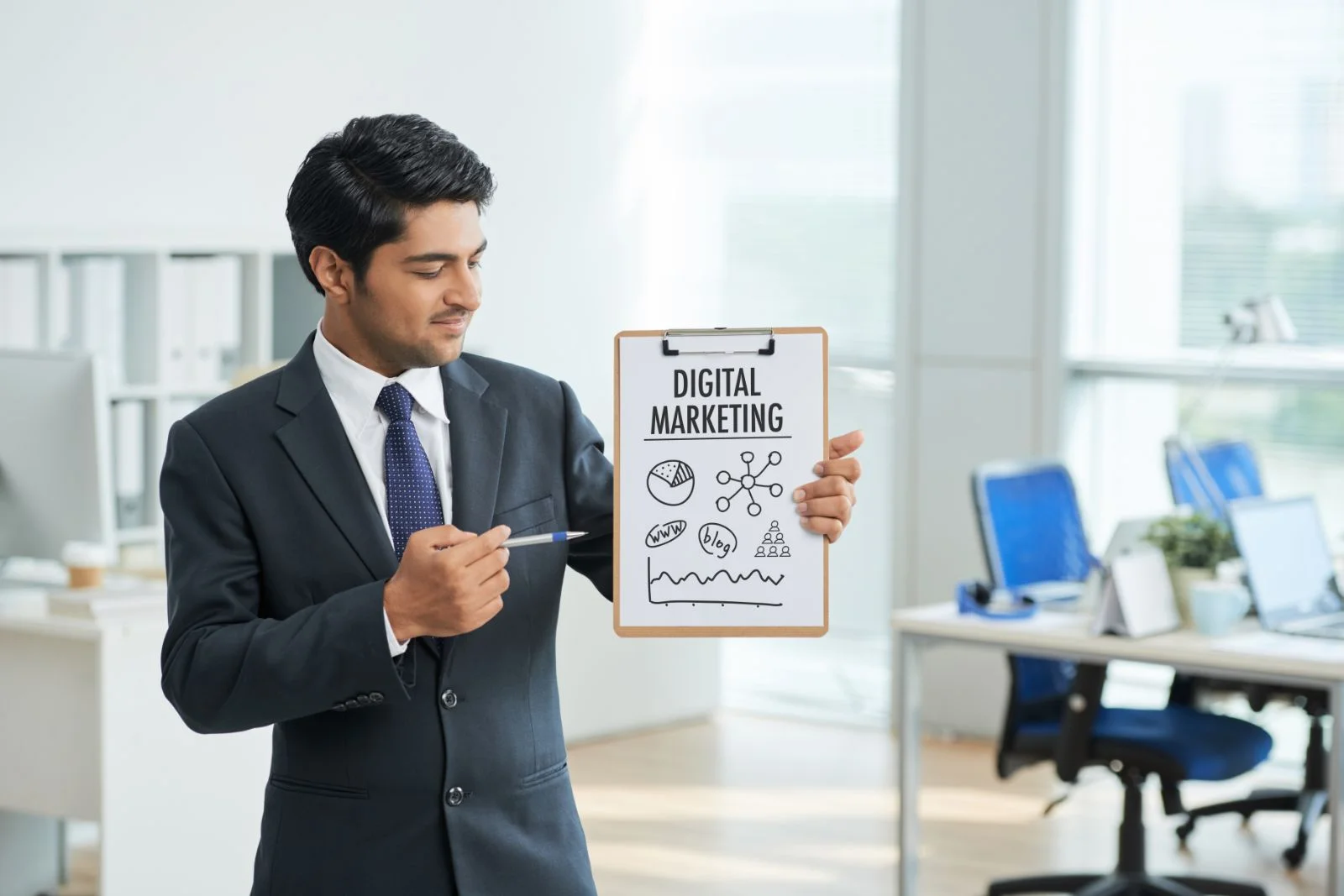
Digital Marketing INDIA · 2026 EDITION Why Small Businesses Need Digital MarketingBloomX EditorialDigital Marketing📅 October 2026⏱ 12 min readGreat Product,
It's 9 pm in Indore. Someone's phone is at 14% battery, and they're typing "best cake shop near me" into Google. Three bakeries show up with photos, star ratings and a Call button. Yours isn't one of them, even though your chocolate truffle beats all three.
That gap is the real reason digital marketing for small businesses isn't optional anymore. Your product can be excellent and still lose to whoever is easier to find, easier to trust and easier to contact. The good news? It's a fixable problem, and fixing it rarely needs a big-brand budget.
Below, we'll walk through six reasons digital marketing matters for a small business, what to set up first, and how to spot which part of your growth is stuck right now.
Small businesses need digital marketing because most buying journeys now start online. Customers search, compare options and read reviews before they call or visit. A consistent digital presence makes your business findable, builds recognition and trust, lets you reach a local or niche audience on a modest budget, and shows exactly which efforts bring in paying customers.
Small businesses need to be online because that's where customers research before they buy. India now has 958 million active internet users, growing about 8% a year, according to IAMAI and Kantar's Internet in India Report 2025.
Before most people buy anything, they do a little homework. They search on Google, scroll Instagram, check a few reviews and maybe ask a friend on WhatsApp. That research happens whether you show up in it or not.
If they can't find you, they'll find your competitor. It really is that simple.
For a local shop, clinic, studio or service business, being findable usually comes down to four basics:
None of this is glamorous. It's the digital version of putting a signboard outside your shop.
Digital marketing builds recognition for a small business by putting its name in front of the same people again and again. People need to see your brand before they remember it, and usually more than once. One Instagram reel won't do it. Fifty posts over six months, a Google profile that keeps appearing in local searches, a monthly WhatsApp update and a couple of genuinely useful blog posts? That starts to.
Here's a pattern we see often. A business posts every day for two weeks around Diwali, gets a spike in enquiries, then goes quiet until the next festival. Each time, it starts again from zero.
Now picture a boutique in Pune that posts three times a week, every week, with the same colours, the same tone and the same friendly founder on camera. A year later, it's the name customers think of when they're finally ready to buy.
Pick a pace you can actually sustain and protect it. A content calendar planned one month ahead makes this far easier than deciding what to post each morning.
A small business can compete with bigger brands online by targeting a narrow, local audience instead of everyone. You don't need the biggest budget to get noticed. You need the right audience.
Traditional media charges you for everyone who sees the ad. A newspaper insert lands in thousands of homes, and most of them are nowhere near your store. Digital platforms let you choose who sees your message by location, age, interests and even the exact words people type into Google.
Local targeting is the big one. A physiotherapy clinic in Andheri can run Google or Meta ads that only show to people within a few kilometres of the clinic. That way, every rupee goes to someone who could realistically walk in.
Niche keywords help too. National brands fight over "running shoes." A small store can own "running shoes for flat feet in Pune" because nobody bothers with it.
Then there's speed. You can test a new offer on Monday and change it by Wednesday, with no approval chain and no head office signing off. And finally, personality. Founder videos, behind-the-scenes clips and real customer stories feel human in a way a polished national campaign rarely does.
Digital marketing turns attention into customers only when every post, ad and page gives people a clear next step. Likes and views feel good. They don't pay rent.
Growth comes from people taking action: Calling, booking, filling a form, walking in, buying.
Think of it in four stages:

Most small businesses pour all their energy into that first stage. The leak usually happens at stage two or three. If your Instagram gets thousands of views but your WhatsApp stays quiet, look hard at what happens after someone discovers you. Is there a clear next step? Is your number easy to find? Does your bio tell people what to do?
For a small business, your website, social media, content and online reviews create the first impression, usually long before anyone speaks to you.
Say a customer is comparing two interior designers. They'll check both Instagram pages. One last posted in 2023. The other shared a finished kitchen project last week, with a short video of the happy client. Which one gets the call?
Four trust signals are worth building first:
A strong online presence tells people your brand is active, credible and worth their attention.
Getting views but not enquiries? Our team builds social media strategies that turn followers into customers.
Explore BloomX social media marketing → [LINK-SMM]
Unlike traditional advertising, digital marketing lets a small business measure exactly what brings in customers. A hoarding on the highway can't tell you how many people looked at it. A Google Ads campaign can tell you how many people clicked, what they searched for and how many of them called you.
You don't need a complicated dashboard. Start with four numbers:
• Where your website visitors come from.
• How many enquiries you get each week, and through which channel.
• Your cost per enquiry, if you run ads.
• How many of those inquiries become paying customers?
Free tools cover most of this. Google Analytics 4 shows your traffic sources. Your Google Business Profile shows calls, website clicks and direction requests. Meta Business Suite shows which posts get saved and shared. Check them once a month, cut what isn't working and put more behind what is.
A quick example. A coaching institute might find that its Instagram ads bring plenty of form fills, while most actual admissions come from people who found it on Google Maps and called directly. Without tracking, it would keep pouring money into the wrong channel. With tracking, it can shift budget in a single afternoon.
If all of this feels like a lot, start small and build in order.
Here's the sequence we'd recommend for most local and early-stage businesses:
Your business may be small. Your growth doesn't have to be. In our experience, most small businesses get stuck in one of three places, and each needs a different fix.
If this sounds like you | The real problem | Where to focus first |
People don't know you exist | Visibility | Google Business Profile, local SEO, consistent posting |
People see you but don't interact | Engagement | Sharper content, clear offers, faster replies |
People interact but don't buy | Conversions | Website, landing pages [LINK-WEB], reviews, follow-up |
Be honest about which row describes you. Spending more on visibility won't help if the real problem is that nobody replies to enquiries for two days.
At BloomX Solutions, we work with growing brands across India on exactly this: Finding where the funnel leaks and fixing that first, before anyone spends another rupee on reach. Whether you run a clinic, a D2C label or a coaching business, the starting question for any small business marketing strategy in India is the same.
Visibility, engagement or conversions: Which one is holding you back?
Digital marketing for small businesses isn't a luxury reserved for brands with crore-sized budgets. It's the most direct way to get found by people who are already looking. It also helps you earn their trust before you ever meet them and see in plain numbers what's bringing in customers.
You don't have to do everything at once. Get findable first. Stay consistent. Make the next step obvious. Measure, then improve. Do those things for six months and you'll have something most of your competitors still don't: a business that customers can find, remember and choose.
READY TO SCALE SMARTER
Stop guessing.
Start compounding.
Book a free strategy call with BloomX and see what AI-powered performance marketing can do for your ROAS – or explore what we’ve built for brands like yours.
Digital Marketing INDIA · 2026 EDITION Why Small Businesses Need Digital MarketingBloomX EditorialDigital Marketing📅 October 2026⏱ 12 min readGreat Product,
Website Development INDIA · 2026 EDITION How Agkiya Transformed Its B2B Website for Better UX, Performance and Conversions BloomX Editorial

Brand Strategy INDIA · 2026 EDITION Security Company Branding: How FortHound Built a Premium Brand Around Trust, Valour and Duty